A fresh look at the fastest-rising tech stacks powering modern startups, plus insights on choosing the right architecture for long-term scalability.
%2020.05.25.png)

.svg)
.svg)
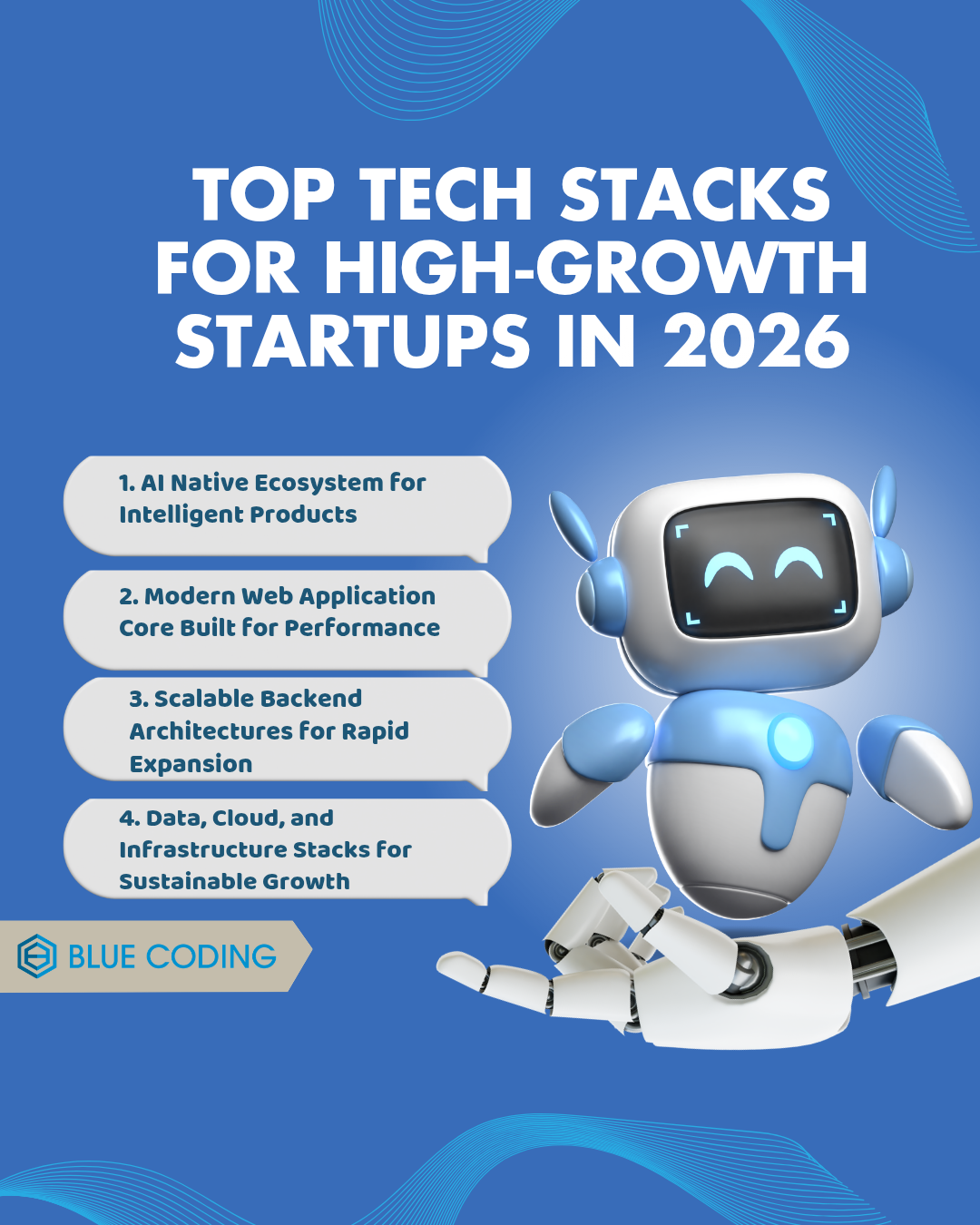
If the last few years proved anything to founders, it is this: your technology choices shape your growth long before your revenue does. The wrong stack slows down your roadmap, creates unnecessary costs, and forces you to rebuild the product halfway through scaling. The right stack quietly powers your success. It helps you ship faster, scale without chaos, and create smoother user experiences that customers stay loyal to. As we enter a new wave of innovation, startups are choosing stacks that support AI, handle rapid scaling, reduce infrastructure costs, and offer cleaner development patterns. Below are the emerging tech stacks that are gaining the strongest momentum among high-growth companies.
A tech stack is the foundation and engine of your product. It is more than a list of languages, frameworks, and tools. It is the architecture that shapes how fast your app loads, how smoothly your team ships updates, and how competitive your product feels in a crowded market. In today’s environment, a tech stack also reflects your ability to adopt AI, support real-time interactions, manage data responsibly, and maintain strong security from day one. Recent industry trends show that companies leaning into AI supported languages and serverless infrastructure are shipping features faster while reducing maintenance costs. Modern frameworks like React Server Components and edge computing solutions such as Cloudflare Workers are raising the bar by offering faster load times and lower latency at a global scale. In other words, your tech stack is a strategic advantage that directly influences performance, cost efficiency, and even developer satisfaction. Choosing the right stack early helps you avoid large refactors later and gives your product a clearer path to scale as your user base grows. The decisions you make now become either your biggest strengths or your long term limitations. Let's continue further and explore the best tech stack for startups this year!
This combination continues to lead the way for teams building AI-first applications. Python offers endless libraries for automation, data handling, and machine learning, while FastAPI allows developers to create fast, clean, and asynchronous APIs without unnecessary complexity. LangChain has grown into the standard for orchestration, RAG pipelines, memory management, and multi-model workflows.
Startups use this stack because it helps them:
→ Build AI features quickly and scale them later
→ Experiment without high engineering risks
→ Integrate NLP, automation, and analytics smoothly
This combination works especially well for SaaS platforms, AI assistants, internal automation tools, and data-driven applications.
For startups that want AI capabilities without maintaining full machine learning pipelines, this stack is a favorite. TypeScript increases reliability, Node.js handles real-time workloads with ease, and powerful third-party model APIs keep the architecture flexible.
Founders choose it because:
→ It offers rapid development with minimal backend overhead
→ The talent pool is large and affordable
→ You can add AI features with simple API calls
React Server Components have finally stabilized enough to become mainstream. Next.js 15 takes performance to another level with stronger routing, smoother streaming, and more predictable data fetching. This stack is perfect for teams that care about clean architecture, fast load times, and long-term maintainability.
Startups use this stack to build:
→ SEO-focused platforms
→ SaaS dashboards
→ Marketplaces
→ Data-intensive frontends
The ecosystem feels mature, and development patterns rely more on web fundamentals than complicated client-side scripts.
This combination is becoming highly attractive for global products that rely on speed at the edge. Remix emphasizes web standards and avoids heavy, unnecessary JavaScript. Cloudflare Workers deliver responses in a few milliseconds from almost anywhere in the world.
Teams choose this stack when they want:
→ Lightning-fast global performance
→ Smaller infrastructure costs
→ More predictable real-time interactions
It is especially useful for travel platforms, fintech tools, logistics systems, and consumer apps that cannot afford slowdown.
This stack signals serious scale. Golang’s concurrency model, low memory usage, and strong performance make it a top choice for high-traffic apps. Pairing it with gRPC boosts inter-service efficiency, and Kubernetes keeps everything reliable under fast growth.
Startups rely on it to handle:
→ High-volume API traffic
→ Real-time communication features
→ Microservices architecture
→ Strong reliability requirements
It is popular among cybersecurity companies, fintech platforms, AI infrastructure products, and enterprise-focused developer tools.
Rust is no longer a niche language. The ecosystem has matured quickly, and Axum offers a clean, structured framework for building web services with safety and speed. When paired with PostgreSQL, this stack gives teams stability and high performance.
Founders choose it when they need:
→ Near-zero runtime errors
→ Memory safety without garbage collection
→ Strong security guarantees
→ Predictable performance under heavy load
For products that depend on real-time interaction or live updates, Elixir remains a powerful option. Phoenix LiveView allows dynamic, interactive interfaces without writing overly complex frontend code. Developers can build real-time features using a single language and framework.
Teams use it for:
→ Collaboration tools
→ Dashboards
→ Messaging applications
→ Social and community products
Another one in the 2026 tech stack trend's list! Serverless architecture has moved from trend to necessity for many early-stage and mid-stage startups. With this stack, teams avoid heavy infrastructure costs while still being able to scale instantly. It reduces DevOps overhead and simplifies backend operations.
This stack works best when startups want:
→ Automatic scaling without manual intervention
→ Lower infrastructure costs
→ Event-driven workflows
→ Simple deployment processes
PlanetScale brings a modern, developer-friendly approach to MySQL with features like schema branching and safe migrations. Prisma ties everything together with an intuitive ORM and strong TypeScript support.
Founders love this stack because it provides:
→ Fast queries
→ Safer schema evolution
→ Branching databases for testing
→ A clean developer experience
It is ideal for SaaS applications, platforms with evolving data structures, and teams that want backend development to feel clean and predictable.
For startups that depend heavily on analytics, reporting, or large data volumes, this combination has become a standard. Snowflake offers flexible data warehousing, Python handles transformations, and dbt organizes analytics models in a clean and maintainable structure.
Teams use this stack for:
→ Clear data modeling
→ Strong governance
→ Automated transformations
→ Scalable warehousing
There is no universal tech stack that works for every startup. The right choice depends on your team, your product, and how quickly you expect to grow. Still, the tech stacks gaining momentum all share a few clear traits.
→ They reduce infrastructure complexity
→ They support rapid feature development
→ They integrate naturally with AI
→ They scale without constant refactoring
→ They offer strong communities and mature ecosystems
If you are in the early stage, choose stacks that let you validate fast. If you are scaling, choose tools that can handle sudden traffic surges. And if you aim to grow aggressively, choose tech that stays stable even when your user base multiplies.
Building modern products requires more than picking the right tech stack. It also demands a development partner that understands the pressure, the pace, and the long-term vision behind every decision. Blue Coding steps into that role with a hands-on approach that helps startups scale confidently, choose the right technologies, and keep their engineering roadmap clean and future-ready. Our teams specialize in high-growth environments, meaning we adapt fast, communicate clearly, and support you with developers who are already experienced in the stacks shaping today’s market. If your startup is gearing up for rapid scaling or preparing to adopt a new tech stack, our team can step in and strengthen your development workflow without slowing you down. Contact us now and let’s discuss strategies on a complimentary strategy call!


Subscribe to our blog and get the latest articles, insights, and industry updates delivered straight to your inbox