Outsourcing growth is expected to continue as businesses seek cost efficiency, specialized talent, and global expansion. This article explores how software outsourcing and IT outsourcing will evolve in the coming years.


.svg)
.svg)
The question about whether IT outsourcing will continue to grow or not is not something that can be answered with a simple yes or no. This question requires research and a response that comes with a reasoning. However, experts at blue coding have analyzed the whole concept of outsourcing, and based on statistics, we have created this blog post that answers the question while also providing you with the reasoning of our answer. We will also be discussing certain strategies that will help you utilize the concept of outsourcing to achieve maximum growth for your business.
IT outsourcing, as a concept, began to take shape during the 1980s. It refers to the practice of hiring external companies or individuals to handle tasks or services that were traditionally managed in-house. Before this, businesses typically handled most of their operations internally. However, as global trade and communication improved, companies realized that outsourcing certain functions could reduce costs and increase efficiency.
The idea can be traced back further, though. During the Industrial Revolution in the 19th century, manufacturers began outsourcing parts of production to smaller, specialized firms to meet growing demands. But it wasn’t until the late 20th century that outsourcing became a widespread practice. In the 1980s, companies like General Electric and Ford started outsourcing parts of their manufacturing processes to other countries, particularly to low-cost regions.
In the 1990s, the rise of the internet and advancements in communication technology played a crucial role in the expansion of outsourcing. It allowed businesses to work with partners from around the world more easily, leading to the growth of offshore outsourcing, particularly in industries like IT and customer service. Today, outsourcing is a common business strategy used by companies of all sizes and industries, ranging from customer support to software development, and it continues to evolve with advancements in technology and globalization.
Outsourcing growth reached its peak in the early 2000s and has continued to be a major part of the business world ever since. During this time, many companies started outsourcing a wide range of services, including customer service, IT support, manufacturing, and even software development. The reason for this rapid growth was the cost savings that came with outsourcing to countries with lower labor costs, such as India, China, and the Philippines. Companies realized that they could reduce expenses and focus on their core business by letting other companies handle tasks more efficiently.
This period also saw the rise of offshore outsourcing, where companies send work to other countries, and nearshoring, where companies outsourced to nearby countries with similar time zones. As technology advanced, especially with the growth of the internet and faster communication tools, it became easier for businesses to collaborate with partners around the world. The impact of outsourcing was so significant that it became a standard practice for many global companies.
Today, outsourcing is extremely common. It is not just limited to large corporations; even small and medium-sized businesses now rely on outsourcing to cut costs and access specialized skills. Services like IT support, marketing, and human resources are often outsourced, and it has become a routine business strategy for companies looking to stay competitive. Outsourcing is so widespread that it’s hard to find an industry that hasn’t been affected by it in some way.
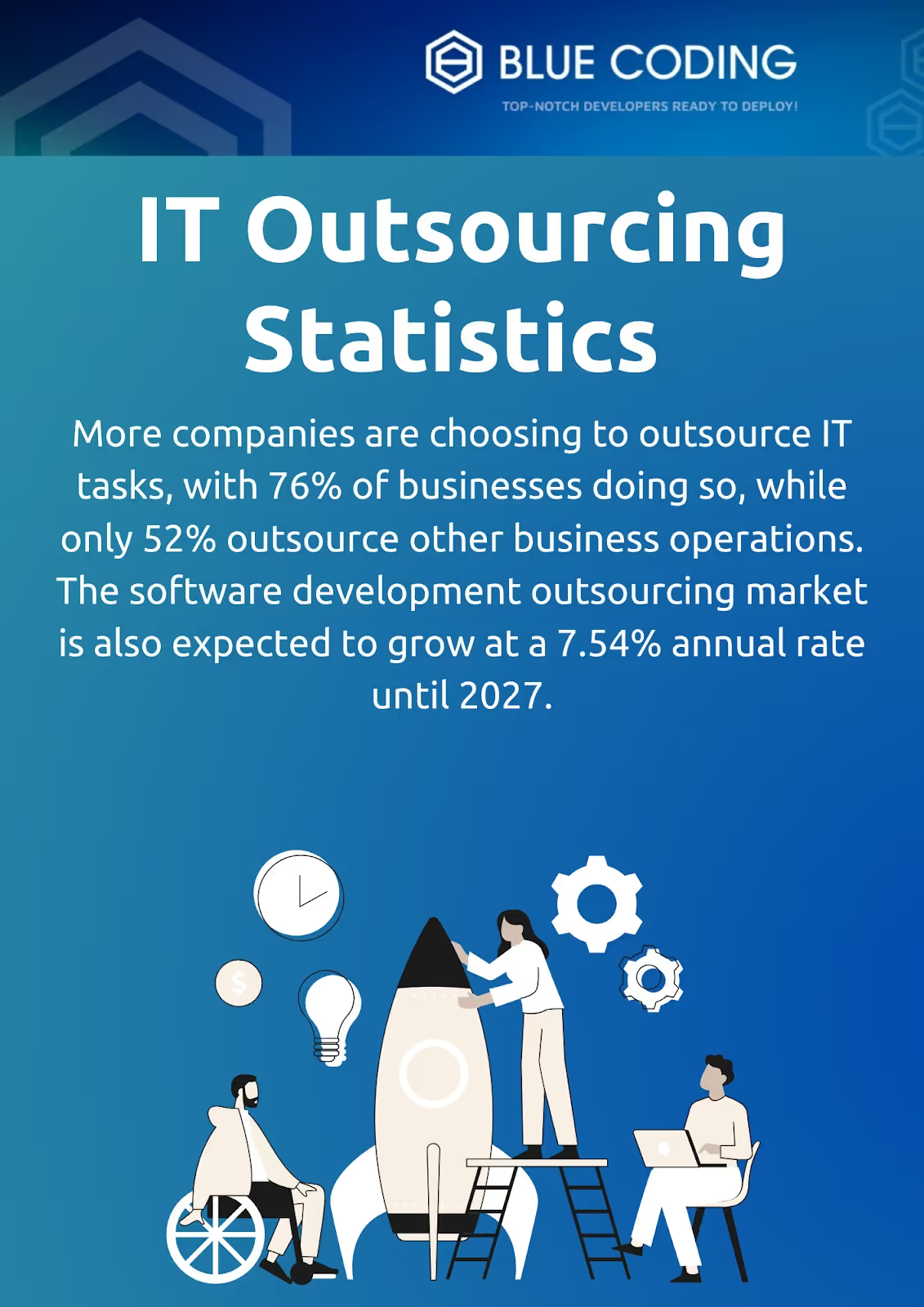
Yes, software outsourcing will continue to grow in the coming years. As businesses evolve and seek new ways to remain competitive, outsourcing provides an effective solution for many operational challenges. Companies are increasingly relying on outsourcing to cut costs, access specialized skills, and expand their global reach. Below, we have listed several key reasons why outsourcing is expected to grow and remain a key business strategy in the future.
Outsourcing growth will likely continue to boom because companies are always looking for ways to reduce costs. By outsourcing, businesses can save money on labor, training, and infrastructure. For example, instead of hiring a full-time employee to manage customer service or IT support, a company can outsource these functions to an external provider in a country with lower wages. This allows businesses to focus their resources on core activities while still getting high-quality work done. As long as cost savings remain a priority, outsourcing will keep growing.
Technology is another reason outsourcing will continue to rise. With the internet and cloud computing, it’s easier than ever for businesses to collaborate with remote teams. Tools like video conferencing, project management software, and instant messaging make it possible to work seamlessly with outsourced employees, no matter where they are in the world. As technology continues to improve, outsourcing will become even more efficient and accessible, leading to more businesses taking advantage of it.
Many companies rely on software outsourcing to access specialized skills and expertise that they don’t have in-house. For instance, software development, graphic design, and marketing are areas where outsourcing is common because hiring experts in these fields can be expensive. IT outsourcing allows businesses to work with professionals who have the right skills, without the need to hire full-time employees or train staff. As industries continue to evolve and require more specialized knowledge, outsourcing will be the go-to solution for businesses needing these specific talents.
As globalization continues to expand, outsourcing is likely to grow even more. Businesses now have access to a global talent pool, which means they can choose the best professionals, regardless of where they live. This expansion of global markets allows businesses to enter new regions and industries that may have previously been out of reach. Outsourcing helps companies expand their reach while minimizing risk and investment. With the world becoming more interconnected, the trend of outsourcing will likely continue as companies seek to stay competitive in the global market.
The shift toward remote and hybrid work models has also fueled the growth of outsourcing. Many businesses, especially tech companies, are now adopting flexible work arrangements, which makes it easier to outsource tasks. Employees no longer need to work in a physical office, so businesses are increasingly comfortable with hiring contractors or freelancers from around the world. This change in how companies operate makes outsourcing a natural fit, and as more businesses embrace these models, outsourcing will keep growing.
Lastly, economic uncertainty often pushes businesses to outsource more. When the economy faces downturns or periods of instability, companies may look for ways to cut costs and remain competitive. Outsourcing becomes a solution to reduce operational expenses, maintain productivity, and avoid layoffs. In times of economic strain, businesses are more likely to rely on outsourcing to maintain their bottom line, ensuring that this trend continues even in challenging economic conditions.
Being in business for more than 10 years now, Blue Coding has established itself as a primary outsourcing agency that connects its clients with top Latin American talent. Our team of tech consultants and developers ensure client satisfaction while also maintaining a healthy and joyful work environment. Our range of services include software solutions, custom development, nearshore outsourcing, staff augmentation and much more. Contact us now and book your free strategy call so we can discuss with you exactly how we can help you in the growth of your business.


Subscribe to our blog and get the latest articles, insights, and industry updates delivered straight to your inbox