Empower Your Team with PHP Developers in 2024: Discover Proven Strategies for Hiring Remote Talent. Explore Skills, Platforms, and Best Practices for Successful Recruitment.


.svg)
.svg)
Software development has undergone significant evolution, with a broad variety of programming languages and development tools now available to developers. Among these, PHP stands out as one of the most crucial languages in the world of web development. Its versatility, ease of use, and extensive ecosystem of frameworks and extensions have solidified its importance in building dynamic and interactive web applications. In light of PHP's significance, our blog post will look into the wonders of PHP development and explore the complexities of hiring PHP developers in the current landscape of 2024. From discussing the fundamentals of PHP programming to outlining strategies for sourcing and evaluating PHP talent, our post aims to provide valuable insights for businesses and organizations seeking to leverage PHP's capabilities for their web projects. Also, while we are on the topic of PHP development, we would recommend you check out our blog post where we discuss the top tools for PHP developers.
PHP development involves creating dynamic and interactive websites using the PHP programming language. PHP, short for Hypertext Preprocessor, is a server-side scripting language specifically designed for web development. Unlike languages like JavaScript, which run on the client's web browser, PHP scripts are executed on the server, generating HTML content that is then sent to the user's browser. PHP remains a top choice for web development due to its widespread adoption, extensive community support, and ease of integration with various databases and web servers.
PHP is commonly used for building content management systems (CMS) such as WordPress, Drupal, and Joomla, as well as e-commerce platforms, web portals, and web-based software applications. Its popularity stems from its flexibility, user-friendliness, and a vast array of frameworks and extensions available for developers. In PHP development, programmers write PHP code to manage databases, process form data, handle user authentication and authorization, and perform other tasks on the server side. PHP seamlessly integrates with popular databases like MySQL, PostgreSQL, and SQLite, enabling developers to create dynamic and data-driven websites. PHP development involves server setup, database administration, security implementation, performance optimization, and code integrity. Developers often utilize frameworks like Laravel, Symfony, CodeIgniter, and Zend Framework to simplify development tasks, promote code reusability, and follow coding best practices.
PHP was designed from the ground up for web development, which means it integrates naturally with HTML and web servers without requiring additional configurations. This ease of setup allows developers to embed PHP directly into HTML files and get started without needing complex environments.
PHP powers major content management systems like WordPress, Joomla, and Drupal, making it a go-to language for website development. Alongside these, frameworks such as Laravel and Symfony offer structured ways to build scalable and secure applications efficiently.
PHP runs seamlessly across multiple operating systems including Windows, Linux, macOS, and major cloud environments. This cross-platform compatibility ensures that PHP applications can be deployed practically anywhere without friction.
One of PHP’s strongest suits is its native support for MySQL, along with integration capabilities for PostgreSQL, Oracle, and SQLite. This makes it an ideal choice for building data-driven applications, especially those requiring high database interaction.
PHP is open source, meaning developers can freely use and modify it. Combined with its long history, this has fostered a massive global community, which contributes to extensive libraries, frequent updates, and a wealth of tutorials and solutions online.
Unlike stricter languages, PHP is forgiving in its syntax and offers developers flexibility in how they approach a task. Whether procedural or object-oriented, PHP allows different coding styles, making it beginner-friendly while still powerful for experienced developers.
PHP shines when it comes to backend tasks like form handling, session management, server-side file operations, and data encryption. This backend strength allows developers to create secure, efficient, and data-rich web applications with minimal effort.
Most web hosting providers offer native PHP support out of the box, often including it as a default option. This eliminates extra configuration steps and makes PHP one of the most deployment-ready languages available for web projects.
With the integration of Zend OPCache in recent PHP versions, developers can significantly boost the performance of PHP applications by reducing the overhead of script compilation. This helps scale PHP applications efficiently in production environments.
Many older websites and applications are still powered by PHP, and the language has maintained strong backward compatibility. This makes it a reliable option for businesses looking to modernize legacy systems without rewriting entire codebases.
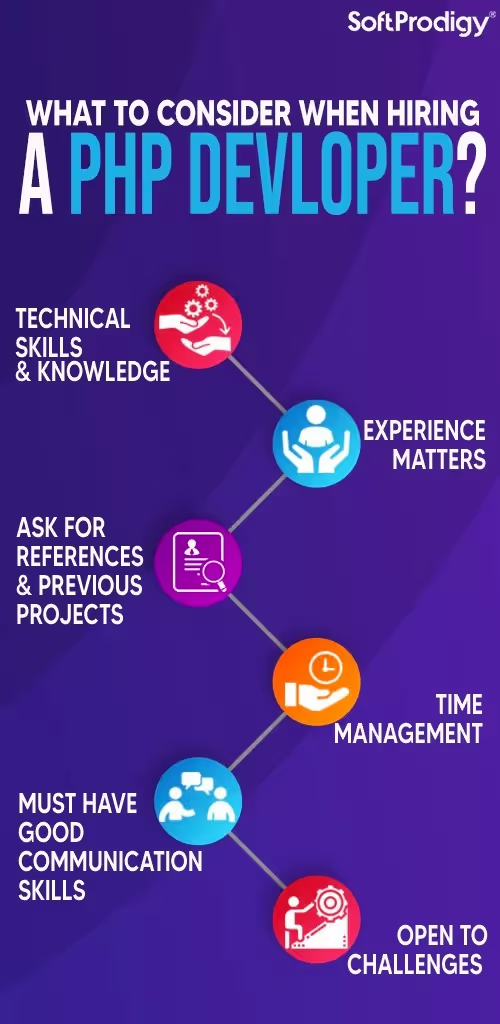
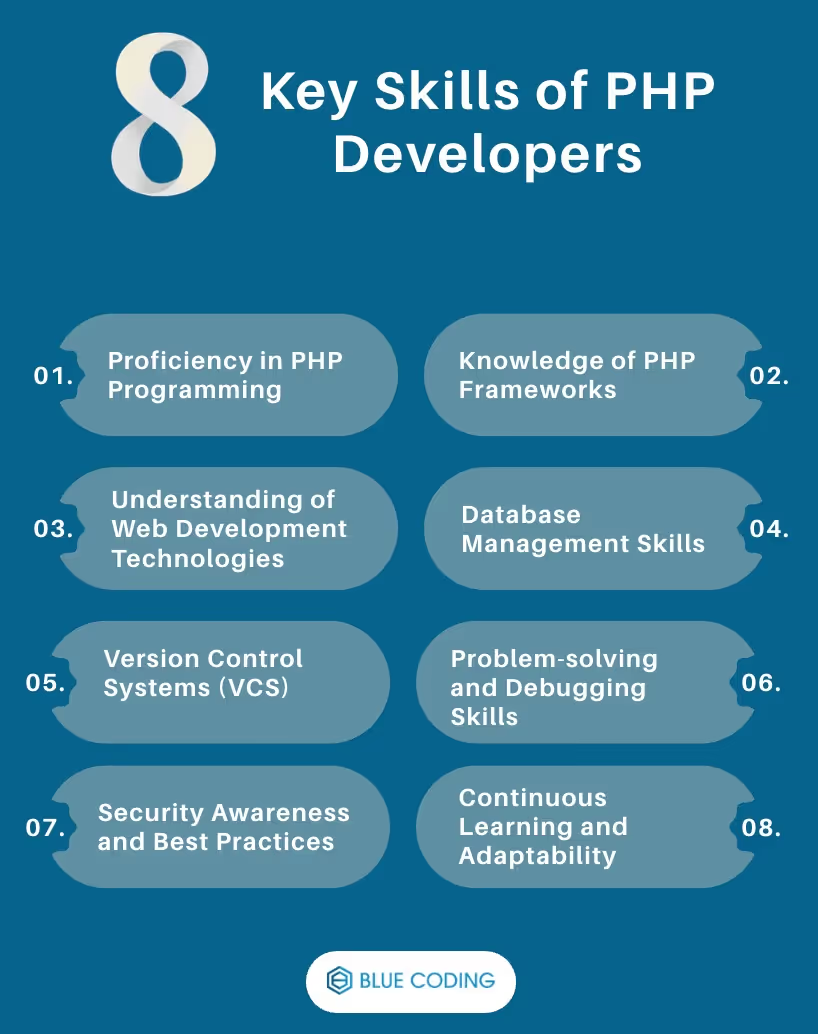
PHP developers need to possess a deep understanding of PHP programming language syntax, semantics, and best practices. They should be adept at writing clean, efficient, and maintainable code. Mastery of fundamental concepts like variables, loops, conditionals, functions, and arrays is essential. Moreover, they should be familiar with object-oriented programming (OOP) principles as PHP supports OOP features.
PHP developers should be proficient in popular PHP frameworks such as Laravel, Symfony, CodeIgniter, and Zend Framework. These frameworks provide pre-built modules, components, and libraries that streamline development tasks, enhance security, and promote scalability. Understanding how to leverage the features of these frameworks can significantly expedite the development process and improve code quality.
A solid grasp of web development technologies is crucial for PHP developers. This includes proficiency in HTML, CSS, and JavaScript, which are essential for building dynamic and interactive web applications. Additionally, knowledge of AJAX, jQuery, and Bootstrap can enhance the functionality and user experience of PHP-based web applications.
PHP developers should be proficient in database management systems like MySQL, PostgreSQL, or MongoDB. They need to understand database design principles, SQL querying, indexing, normalization, and optimization techniques. Integrating PHP applications with databases efficiently ensures data integrity, security, and scalability.
Familiarity with version control systems such as Git is indispensable for PHP developers. Version control enables collaborative development, facilitates code management, and ensures codebase integrity. Proficiency in Git allows developers to track changes, manage branches, merge code efficiently, and collaborate seamlessly with team members.
PHP developers should possess strong problem-solving and debugging skills to identify and rectify issues in their code efficiently. They should be proficient in using debugging tools, logging mechanisms, and error-handling techniques to diagnose and resolve software defects effectively. Additionally, the ability to troubleshoot and optimize code performance is essential for delivering high-quality PHP applications.
Security is a critical aspect of web development, and PHP developers must be well-versed in security best practices and principles. They should understand common security vulnerabilities such as SQL injection, cross-site scripting (XSS), and cross-site request forgery (CSRF), and employ techniques like input validation, data sanitization, and parameterized queries to mitigate these risks. Adhering to secure coding practices ensures the integrity and confidentiality of web applications and protects against malicious attacks.
Technology evolves rapidly, and PHP developers need to stay abreast of emerging trends, tools, and techniques in the field of web development. They should demonstrate a willingness to learn new technologies, experiment with different methodologies, and adapt to changing industry standards. Engaging in continuous learning through online tutorials, forums, and workshops enables PHP developers to enhance their skills, broaden their knowledge base, and deliver innovative solutions effectively.
Blue Coding, a premier nearshore outsourcing agency, specializes in providing top-tier PHP developers for your projects. With a keen eye for talent and a rigorous vetting process, we ensure that only the most skilled and experienced developers join our ranks. Our PHP developers possess expertise in a wide range of frameworks and technologies, allowing them to tackle complex projects with precision and efficiency. Whether you need assistance with web development, application maintenance, or system integration, our dedicated team is equipped to deliver results that exceed your expectations.
At Blue Coding, we understand the importance of seamless communication and collaboration. Even though we specialize in bringing you the best talent from the LATAM region, our developers are fluent in English and are accustomed to working in distributed teams, ensuring smooth coordination regardless of geographical barriers. Looking to augment your development team with skilled PHP developers? Contact us today to hire remote developers and explore how Blue Coding can help you achieve your goals.


Subscribe to our blog and get the latest articles, insights, and industry updates delivered straight to your inbox